



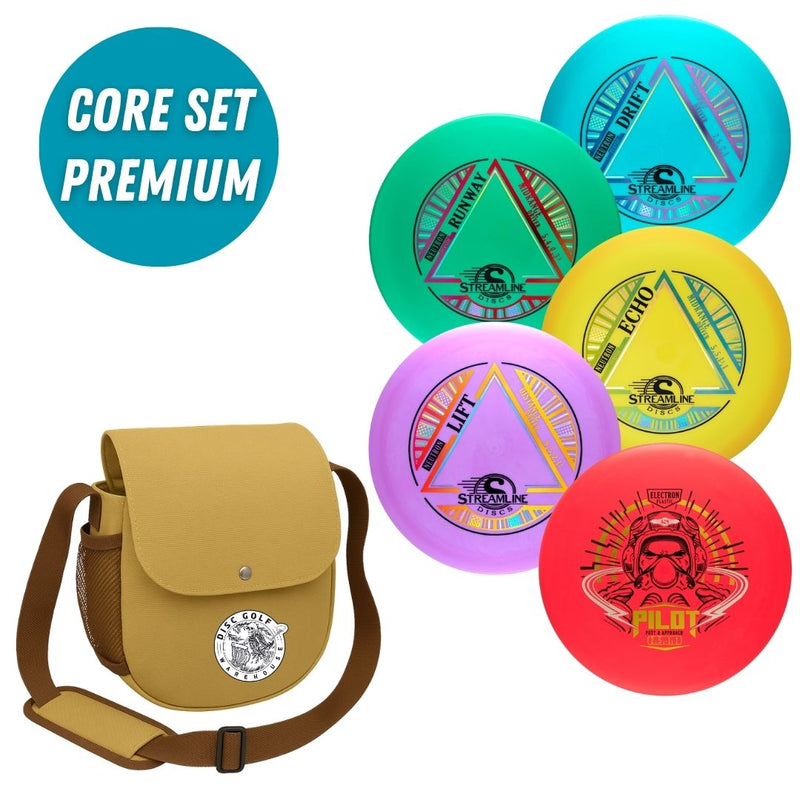
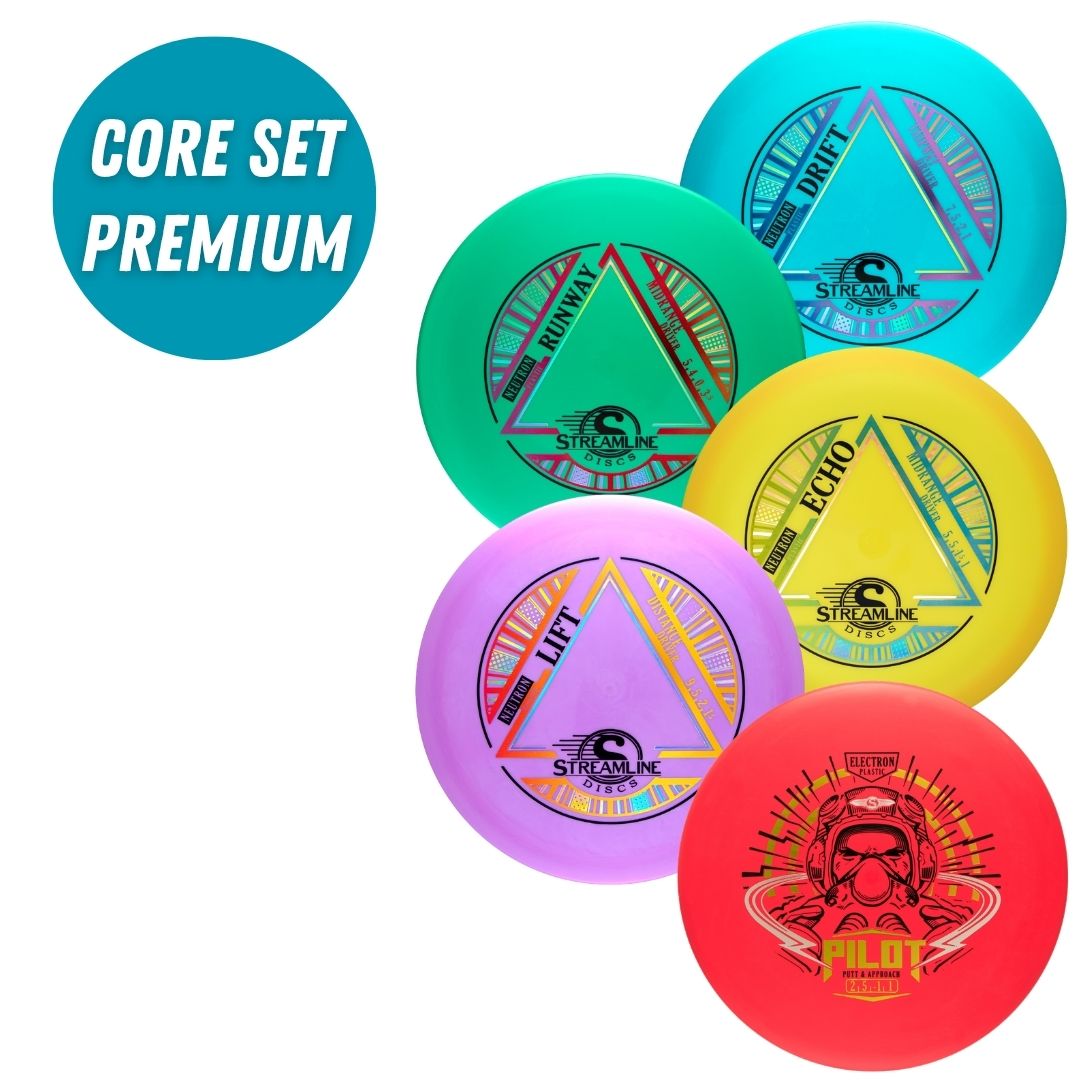
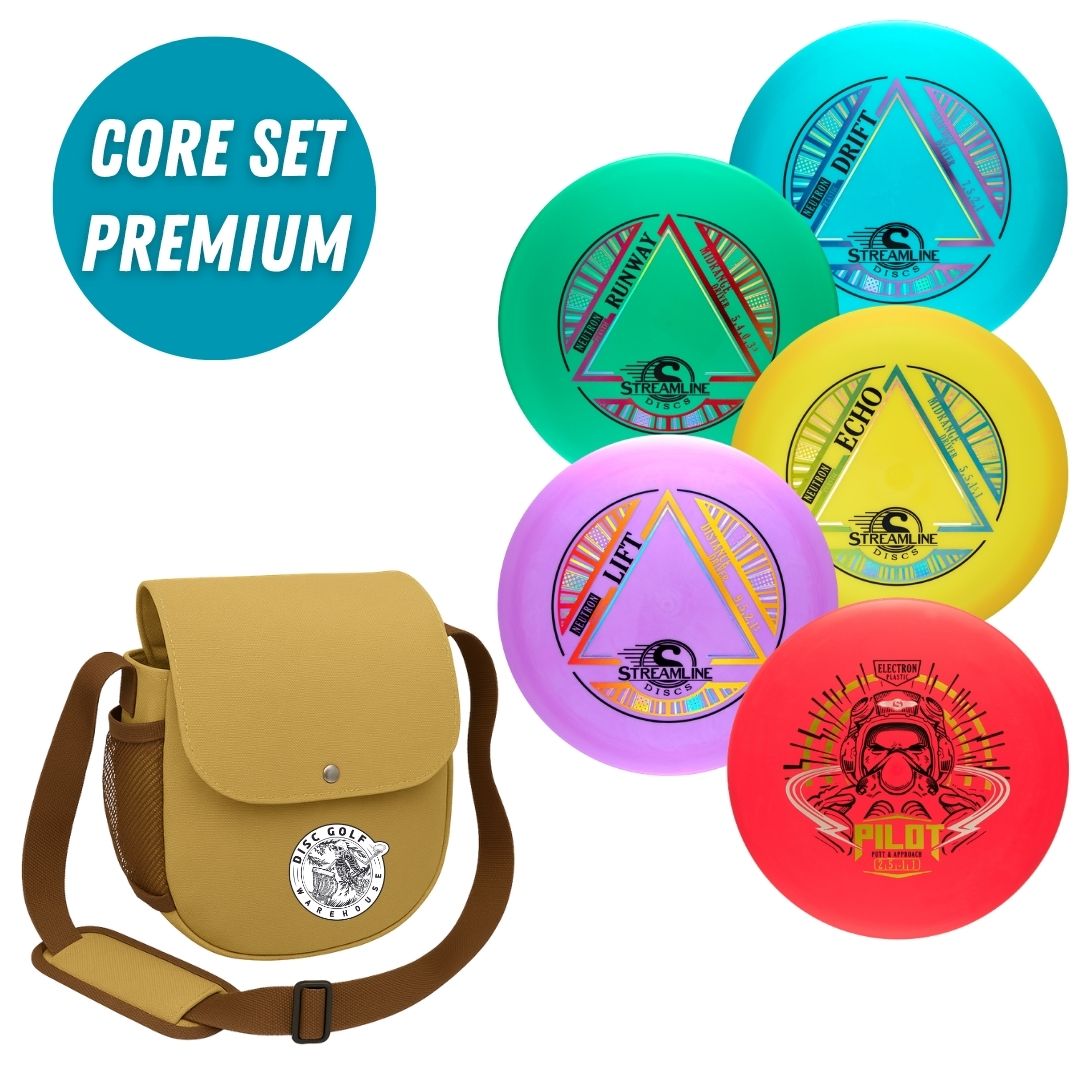
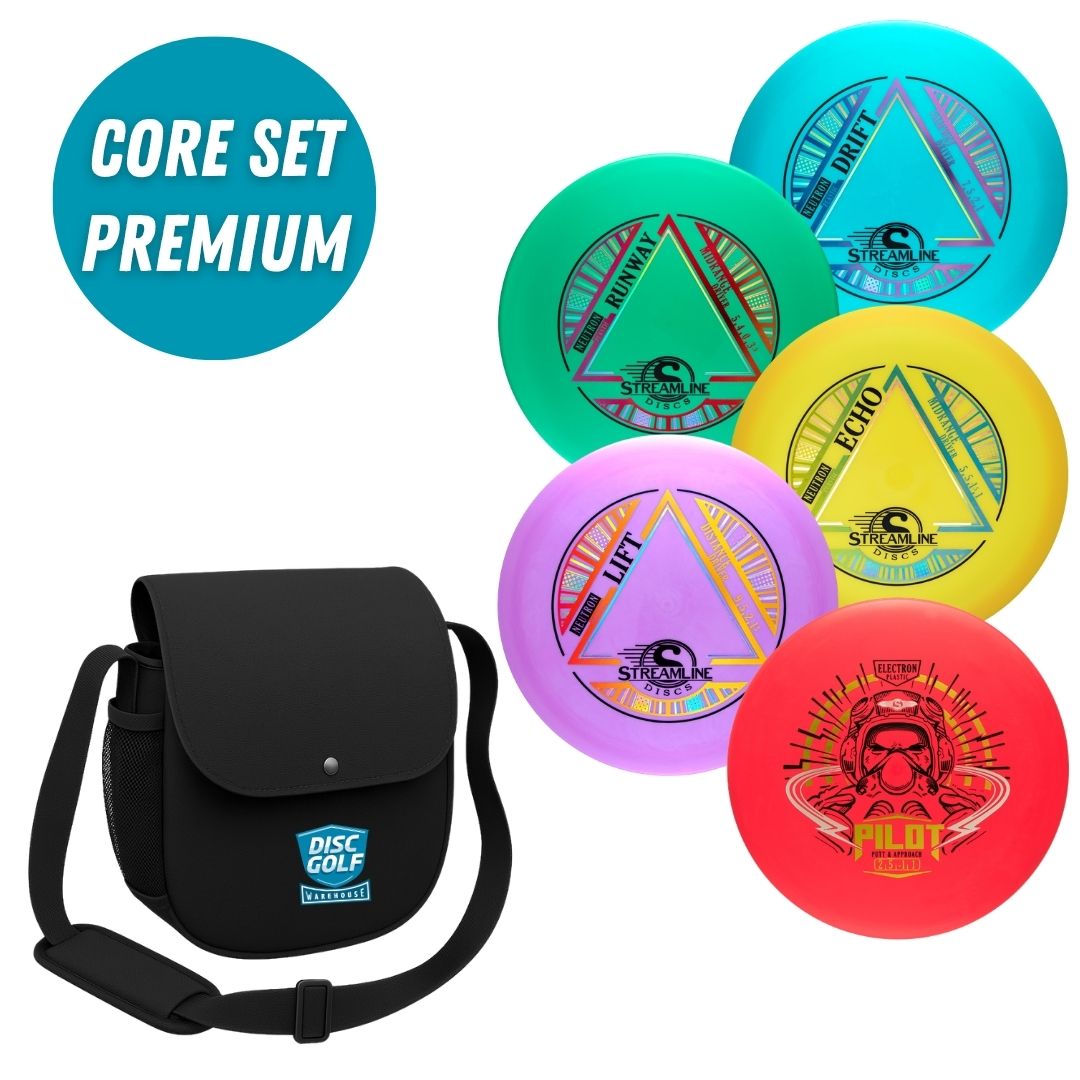
Streamline Premium 5 Piece Starter Set
Pickup available at Hamilton Hill Warehouse usually ready in 24 hours
Five Discs, Every Situation Covered: Streamline Premium Five Piece Starter Set
You've got the basics down and you're ready for a more complete bag. This Streamline Premium Five Piece Starter Set builds on the three disc foundation with two purposeful additions, the Lift distance driver and the Runway overstable midrange, so you're covered for distance, wind, and forehand shots too. Grab the five disc set on its own, or bundle it with our DGW Starter Bag to have everything sorted in one go.
What's Included

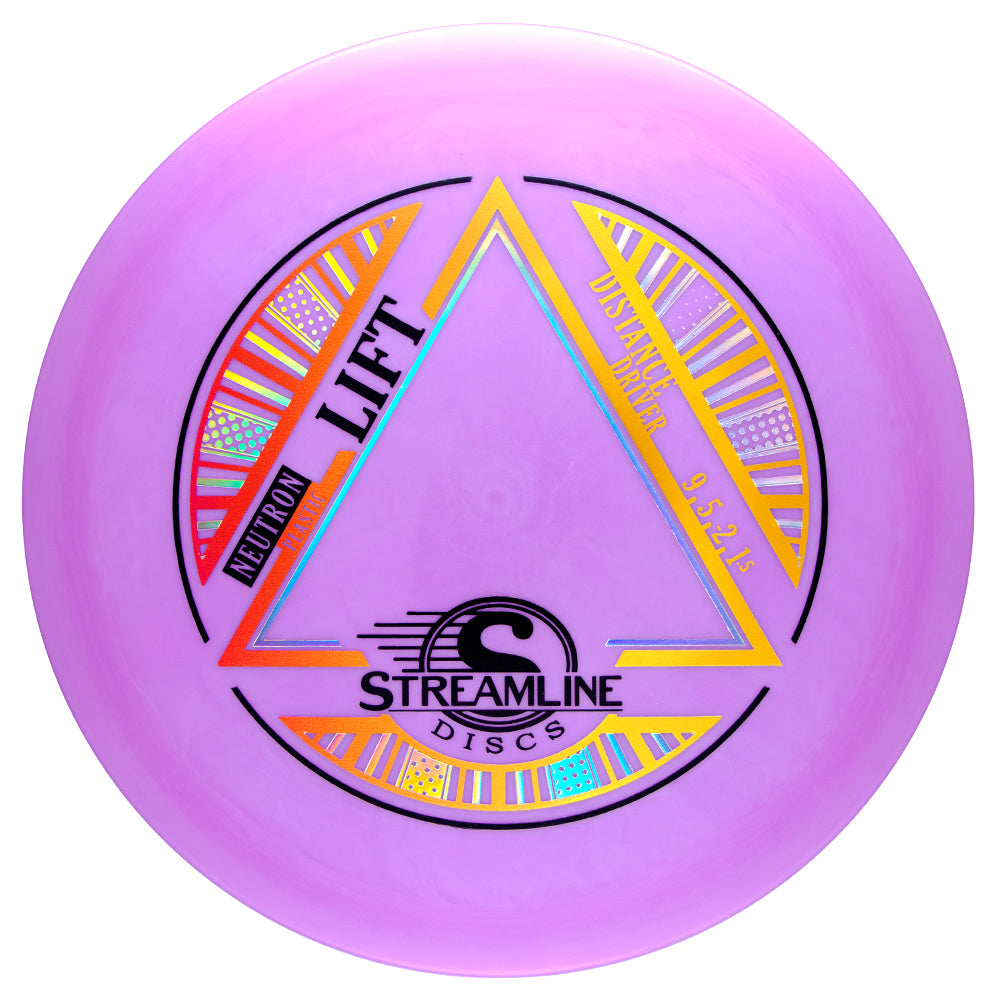
Lift
Straight-flying distance driver with a comfortable rim and effortless glide. Makes distance feel achievable while you're still building arm speed.

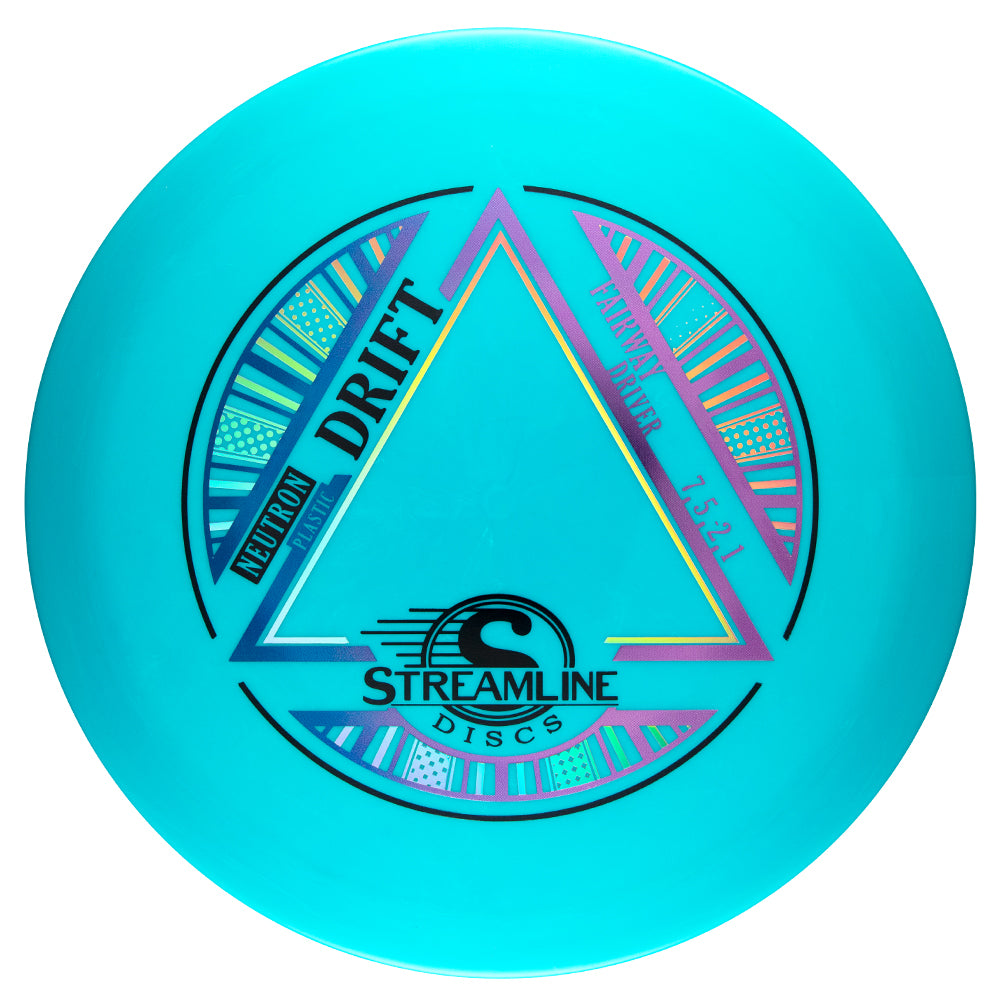
Drift
Forgiving fairway driver with plenty of glide and a gentle fade. Comfortable off the tee and predictable while you're still finding your arm.

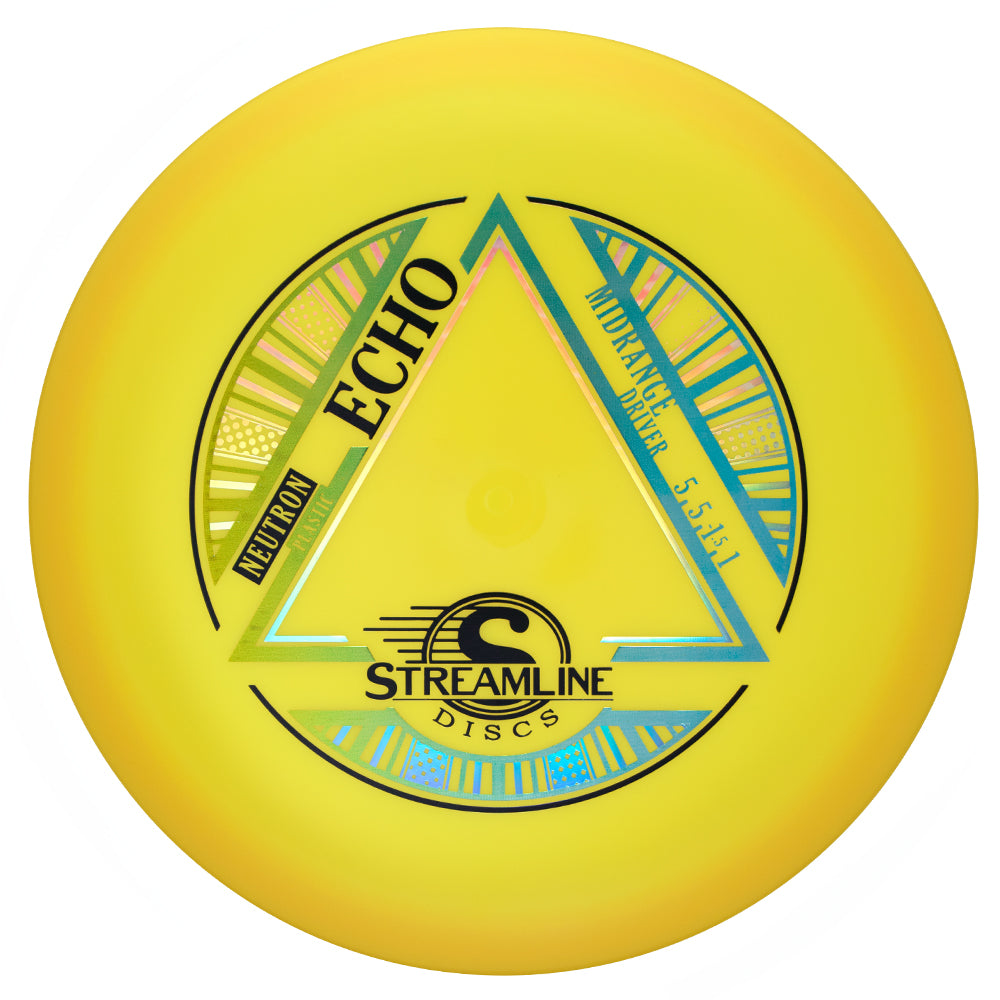
Echo
Wants to fly straight, plain and simple. Comfortable in hand and reliable enough to become the disc you reach for most.

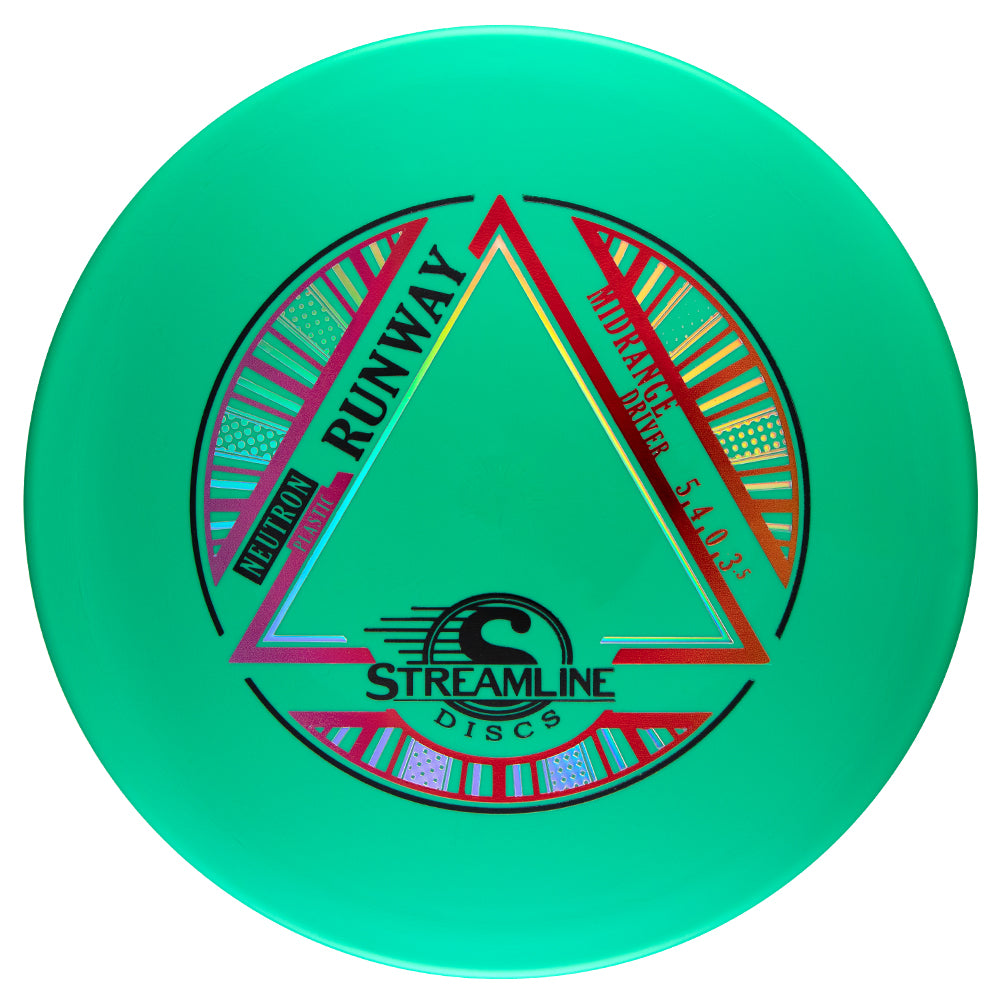
Runway
Overstable workhorse that holds its line in wind or on forehand shots. The disc that teaches you to shape a line on purpose.

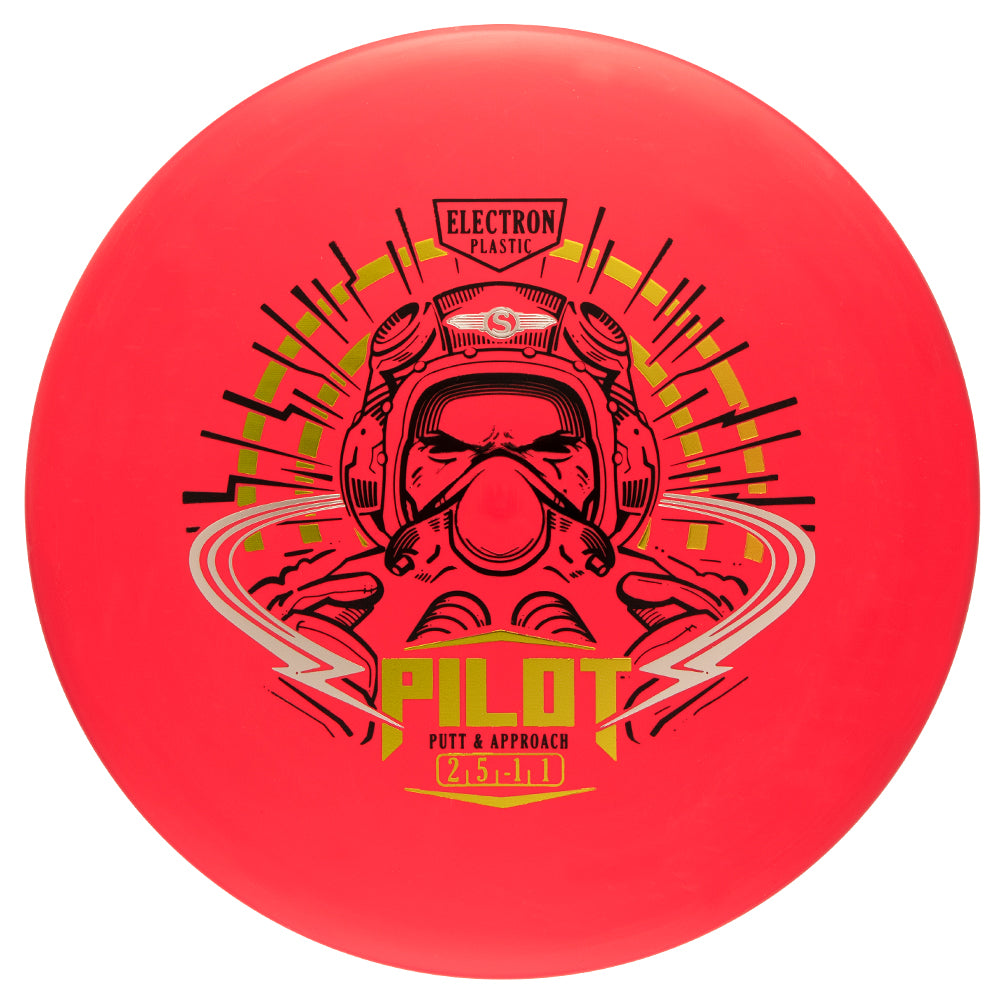
Pilot
Grippy and confidence inspiring on the green. Neutral flight that holds whatever line you put it on.
What do these numbers mean? See our Flight Numbers Explained page

Flight numbers made simple. Once you can read them, you'll pick the right disc in an instant.
Every disc golf disc has four little numbers stamped on it, something like 11 / 5 / -1 / 3. To a new player they look like a secret code. Here's the good news: once you know what the four numbers mean, you can read how a disc wants to fly at a glance. Let's break it down.
The BasicsThe Four Numbers
They always appear in the same order: Speed, Glide, Turn, Fade.
Speed
1 to 14How much power a disc wants, not how far it goes on its own. Faster discs have wider, sharper rims built for a strong throw.
Beginner tip: slow is your friend. A slow disc thrown smoothly beats a fast disc thrown hard.
Match the disc to your power, not the biggest number.
Glide
1 to 7How well the disc stays in the air once it's flying. More glide floats further; less glide drops sooner and handles wind better.
Beginner tip: more glide helps you squeeze out distance while your form develops.
Higher glide carries; lower glide controls.
Turn
+1 to -5The "high-speed turn," what the disc does while it's still fast and accelerating. A negative number drifts gently right (RHBH) and is easier to throw straight.
Beginner tip: a bit of minus here is your friend.
More minus = easier to throw straight with less power.
Fade
0 to 5The "low-speed fade," what the disc does at the end as it slows down. Higher means a stronger hook back to the left (RHBH).
Beginner tip: lower fade gives a straighter, more predictable finish.
Low fade lands straight; high fade hooks home.
Left-handers and forehand throwers: turn and fade simply mirror, so a disc that drifts right for a right-handed backhand will drift left for you.
Start and FinishThe Two Halves of a Flight
Worth knowing why turn and fade carry those "high-speed" and "low-speed" names.
So the last two numbers describe the start and the finish of the flight. Read them together and you've got the whole shape.
Don't Skip ThisThrow It Nose Down
The flight numbers only hold true if you release the disc nose down, with the front edge angled slightly toward the ground.
Throw it nose up and the underside catches the air like a little parachute. The disc never accelerates, so it never reaches its high-speed turn, and it just stalls and drops, no matter what the numbers say. If a disc isn't flying anything like its ratings, nose angle is the first thing to check.

Putting It TogetherHow to Read a Flight Line
A distance driver at:
- 12 fast, wants a strong throw
- 5 good glide, holds the air well
- -1 drifts slightly right through the fast part of the flight
- 3 finishes with a solid hook back to the left
And a putter at 2 / 3 / 0 / 1: slow, gentle, flies straight and barely fades. Same four numbers, completely different disc, and now you can picture each flight before you throw it.
Why Your Disc MisbehavesThe Same Disc Flies Differently for Everyone
Here's the bit that trips up new players: a disc only flies to its numbers if you throw it fast enough. The same driver might fade out early for a beginner, fly long and straight for an intermediate, and turn hard over for a big arm. Nothing's wrong with the disc, it's just meeting different power.
That's exactly why we steer beginners toward slower, understable discs: they fly their best at the speeds you're throwing right now.

The Words You'll Hear MostUnderstable, Stable, Overstable
Turn and fade together decide a disc's "stability," and this is where a lot of beginner confusion lives.
Reading the ConditionsWhat the Wind Does
Wind changes how a disc behaves, and it catches everyone out at first. Once you know the rule, it's simple.
Into a headwind
A disc acts more understable. The wind lifts it and it flips easier, so a straight-flyer might turn and roll. Reach for something more stable or overstable, keep it lower, throw with less height.
With a tailwind
A disc acts more overstable. The wind takes away its lift, so it fades earlier and drops sooner. Lean on glide and a more understable disc to keep it floating forward.
The PayoffWhich Numbers Should a Beginner Look For?
The handy shortcut: a disc's speed roughly tells you its type. It's not identical brand to brand, but as a rough guide:
So you don't really shop by speed, you pick a type, and then the numbers that matter are turn and fade. While you're learning, lean understable with low fade:
- Putters — look for low fade (0 or 1) so it holds a straight line for approaches and putts.
- Mid-ranges — 5/5/0/0, or around -1 to -3 turn with low fade, make lovely beginner mids.
- Fairway drivers — this is where understable helps most. Aim for a good chunk of turn, around -2 to start. These run roughly 6 to 9 speed, and the slower end needs less power, so start slower and work up.
- Distance drivers — the fastest discs, best saved for later. They need real arm speed, and early on they just fade out and dive. They'll be waiting when you're ready.
Handy trick: once you've got a disc you love, use the numbers to find its cousins. Love a fairway but wish it flipped more? Look for the same speed and glide with a bit more minus in the turn.

Keep It RealA Few Honest Notes
Flight numbers are a brilliant guide, not a promise:
- They're a starting point. Your arm speed, the wind, your technique and the plastic type all change how a disc flies. Plastic matters more than people expect, the same mold in a premium plastic can fly noticeably more stable than in a base plastic.
- Only compare within the same speed. Glide, turn and fade only line up between discs of the same speed, so a putter's numbers can't be compared to a driver's.
- Faster discs play more overstable. A -3 driver needs to be thrown a lot harder than a -3 putter to actually show that turn. The faster the disc, the more power it wants before it does what its numbers say.
- Discs change as they wear in, usually getting more understable over time.
- Brands rate differently, so compare numbers within a brand rather than across brands.
Treat the numbers as a shortcut, throw a heap of discs, and you'll learn what suits your game fast. That's half the fun.
Value Breakdown
Discs Only
Discs + DGW Starter Bag
Who's This Set For?
This is our Premium plastic set, Neutron and Electron, the same materials trusted by top players. No base plastic, no shortcuts, this is top-shelf gear built to perform and last. Built for players 16 and up who want genuine quality gear. If you're after a lighter weight set for junior players, check out our other starter set options.

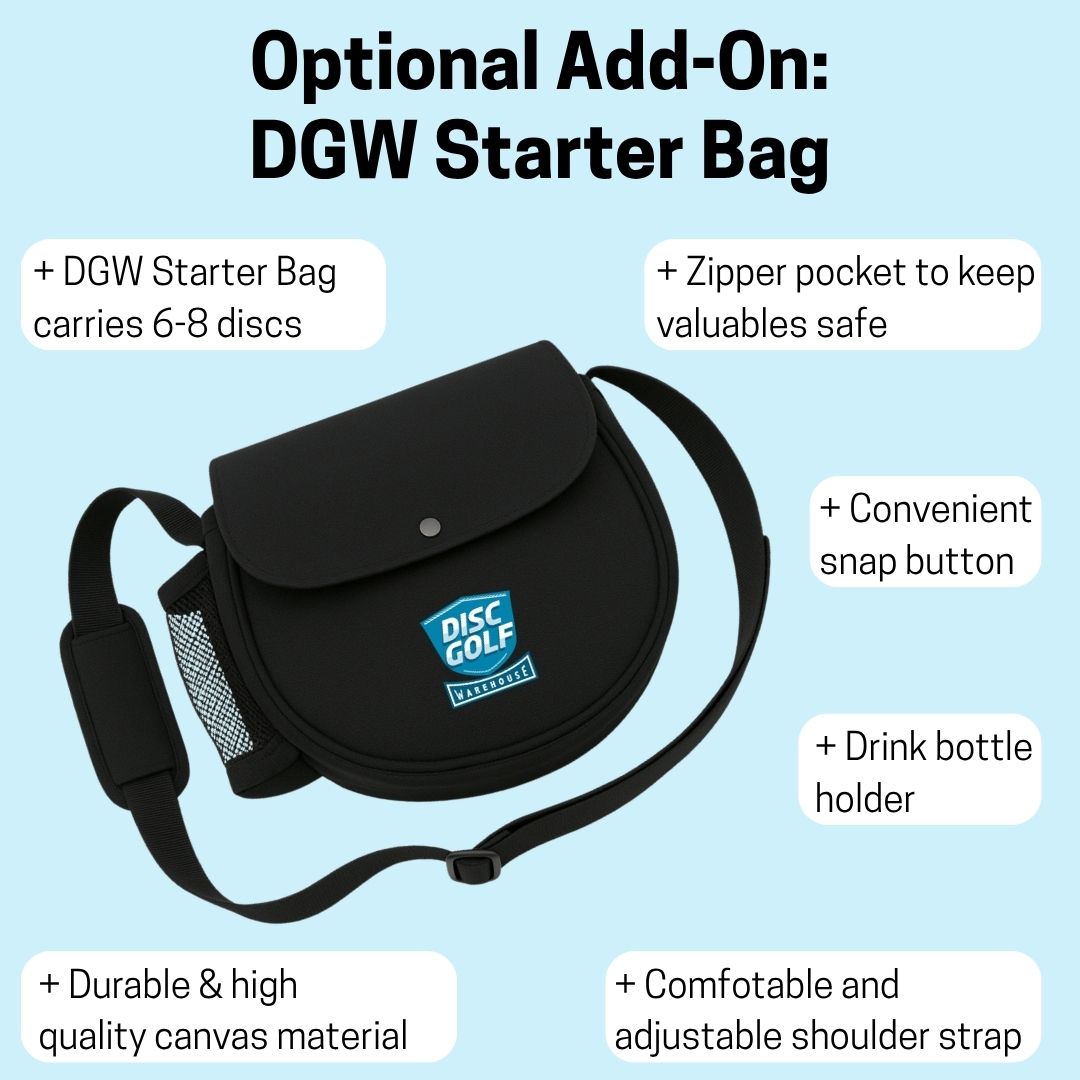
DGW Starter Bag
Add it to your set and have everything sorted from your first round.
- 📦 Carries 6–8 discs
- 🥏 Dedicated putter pocket
- 🔒 Zip pocket for valuables
- 💧 Bottle holder
- 🎒 Adjustable shoulder strap
- 🧵 Durable canvas material
- 🔘 Snap button closure
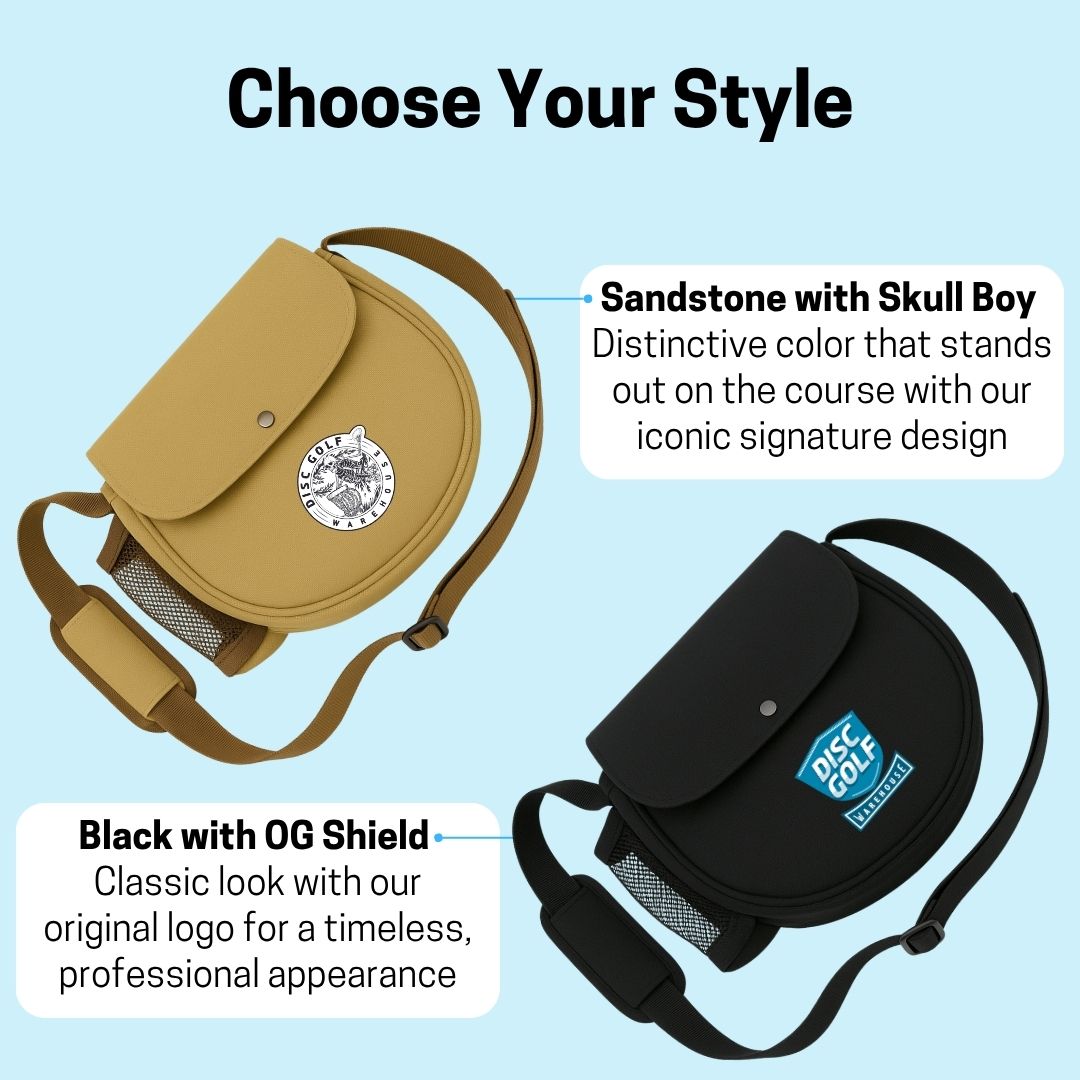
- 🖼️ OG Shield or Skull Boy logo
About the Plastics in This Set
Neutron Plastic
Streamline's premium plastic, shared with parent brand MVP. Neutron plastic delivers excellent grip and maintains flight characteristics far longer than base plastics, making it a favourite of experienced players.
Electron Plastic
Streamline's base plastic, also shared with MVP. Electron provides that softer, tackier feel that grips chains better and sticks in the basket, perfect for putting and approach shots.
Similar Products


Streamline Premium 8 Piece Starter Set


RPM Discs NZ Starter Set


Streamline Premium Starter Set

